
Choosing the right plant for the right conditions
Climate conditions -
Drought tolerant plants - In this day and age we are constantly seeing dryer conditions for relatively long periods in-between downpours.This can make it very difficult to keep plants looking healthy and no form of watering will have the same effect as pure rainwater penetrating the ground naturally.
Selecting plants can be the key to getting it right from the start, many plants are adapted to drought conditions from where they have originated from so a little research always helps out. Finding out where a plant comes from can give you all the answers to know if it will survive in your garden and under the atmospheric conditions your garden has.
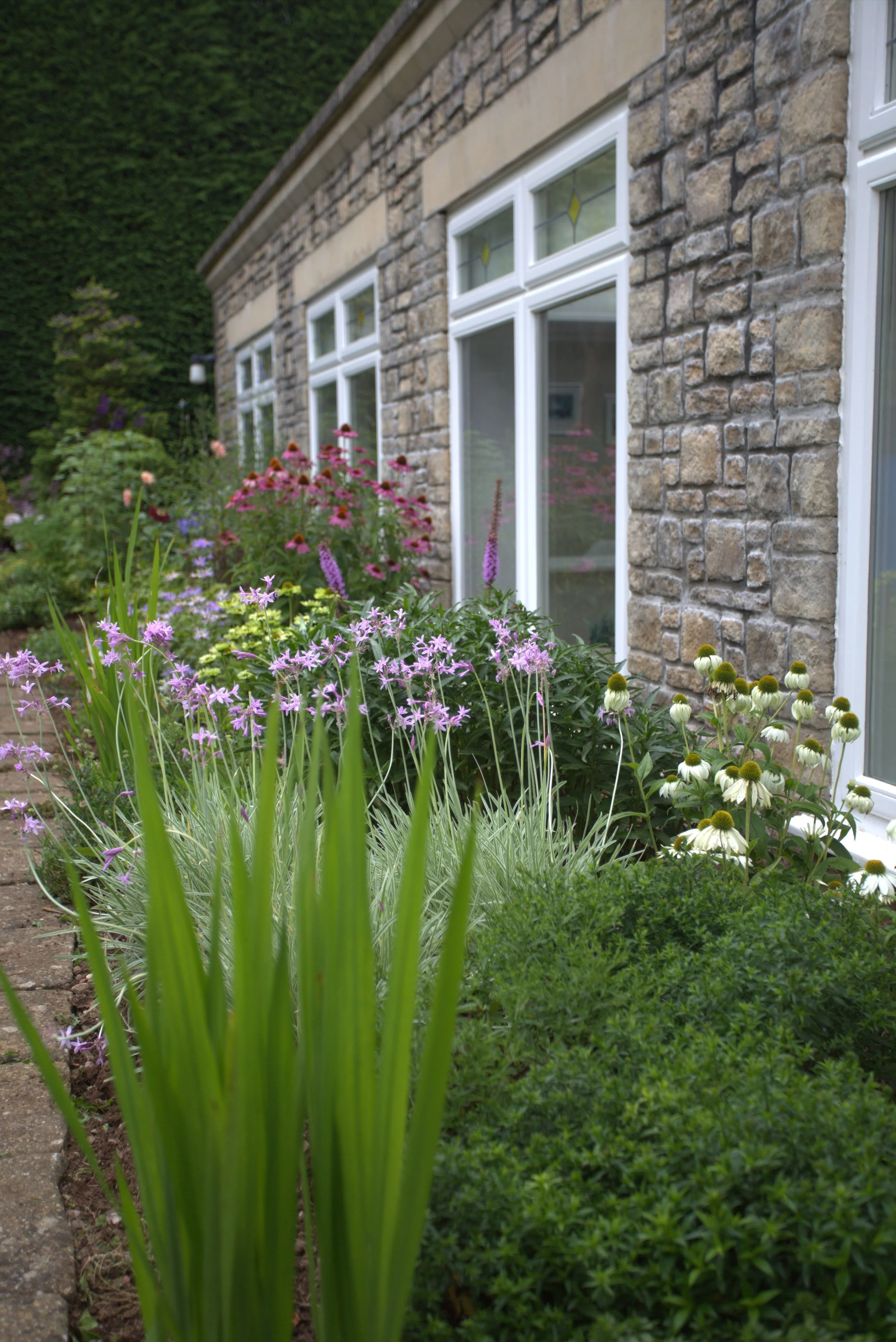
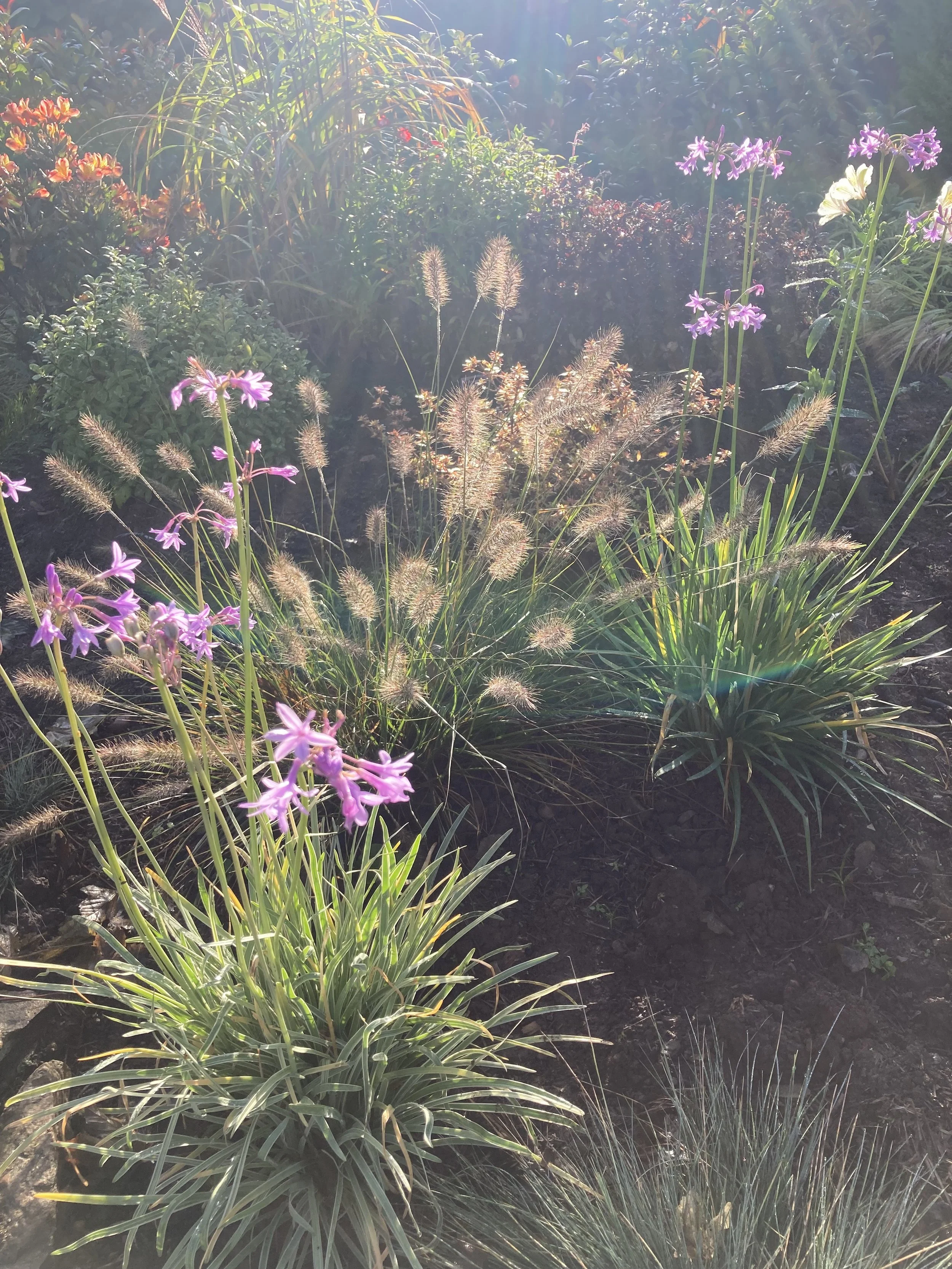
Plants with small leaves shed heat and so lose less water, ( Pittosporum )long, narrow leaves are also very good at shedding heat ( Tulbaghia Violacea ). Grey leaves usually signify drought resistance whereas hairy leaves shade themselves with there own hairs.
Many plants have very shallow roots ( such as Lavendar ) so although the leaves are grey the roots like to be kept moist, if they dry its like turning a stop cock off and no water reaches the upper part of the plant, Roses are very similar which is why mulching plants with wet soil is a bonus and feeds them as well.
Leathery foliage loses less water than soft leaves and waxy leaves have a shiny surface which reduces evaporation.
Fleshy and succulent leaves store moisture for dry spells and aromatic leaves contain volatile scented compounds that are thought to cool foliage as they evaporate. Spikes act as cooling fins and slow growing plants can conserve limited supplies of water.
Plants with tubers,corms,rhizomes, bulbs can store water for long periods of time as they use these organs as storage tanks. ( Agapanthus,Alstroemeria, Lilies )
Most of today’s flowering plants rely on insects for pollination, but Conifers and about 12% of the worlds flowering plants are wind pollinated such as Grasses and cereal crops which we rely on for food. Although Honey Bees get most of the credit at least 1500 insect species pollinate plants in the UK.
The only deciduous conifer is the Larch, it transpires more water than evergreens, takes in 20% more Co2 than pine.
Yew trees are hard to age as they don’t have rings
Strawberry is the only fruit to bear its seeds on the outside.